Inviting curiosity and compassion as you explore your inner world

Trauma, depression, anxiety and life challenges can leave you feeling disconnected from yourself, overwhelmed, dysregulated, out of rhythm and without a sense of true meaning or purpose. Life events can imprint certain unhelpful ways of thinking upon you, which you may find difficult to escape, or even to identify. Your intuition may feel like a luxury you cannot afford, or access.

You may fear your feelings, believing they are too much for you to contain. You may feel that you are too much for others or too little. You may be in battle with your body, misunderstanding it’s language and unsure of how to re-connect with it. You may feel betrayed by yourself, by your body.

You may doubt yourself, doubt whether you are capable, doubt whether you can love and be loved. Your beliefs about yourself and the world may be unfounded, and unhelpful. You may wonder who you are, whether you can know yourself in any meaningful way. Your life, your decisions, your view of yourself, may be dominated by events, people, traumas of the past. You may feel stuck and unable to move past such things.

Your behaviours may be contrary to what you truly desire for yourself; you may feel you have no control over them. You may get stuck in a loop of damaging, unhelpful ways of acting in relationships. You may secretly long for more in life. You may desperately want to understand yourself. You may need to turn inward and accept the call to return home to your true self.

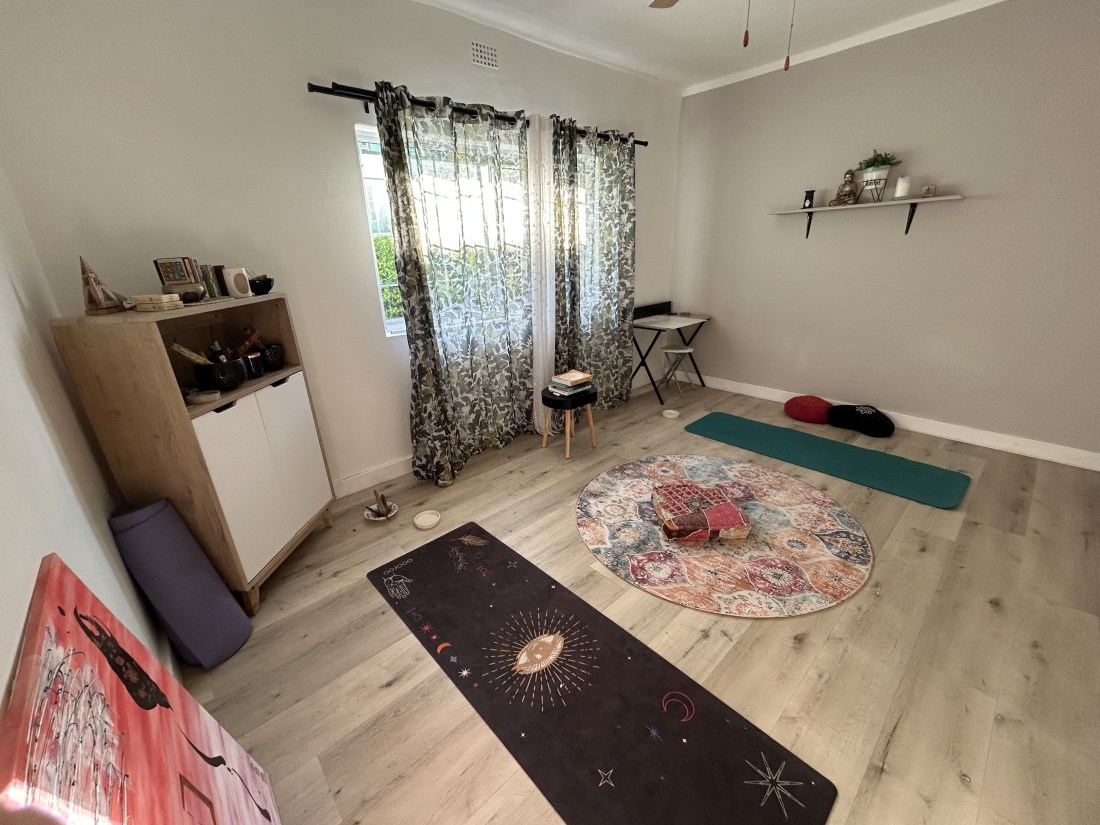
Therapy sessions are adapted to your needs. I work on a continuum from verbal therapy to body-based techniques. This holistic approach to therapy is suited to various mental health challenges, such as depression, anxiety, bipolar and personality challenges, as well as life transitions or spiritual searching. The work is trauma-informed and consciously focused on reducing power dynamics. I work out of a beautiful practice in Vredehoek, Cape Town, where we have the space to move between verbal and body-based work.

To enquire about therapy or book a session, contact Melissa: Whatsapp 0834129768 or email info@melissamcwalter.co.za


New frontiers in psychedelic therapy

As Ketamine becomes more mainstream, and organisations like SIPSA (Society of Interventionist Practitioners South Africa) are forming to potentially guide the use of psychedelic-assisted therapy, one has to realise that we are reaching a new era, where medicines (such as ketamine) that were previously thought to be damaging or innocuous, might in fact have some benefit.1 According to SIPSA’s constitution, one of their aims is:

“To promote the professional and legitimate interests of ketamine and
psychedelic treatments.”2

The growing interest in legal psychedelic treatments can be understood, as few medications offer the immediate relief for suicidal ideation than ketamine can3.

Other psychedelic treatments that are not legal in South Africa may not be on offer at healthcare establishments, but individuals are experimenting with them on their own4 and thus sometimes bringing the psychedelic experience into the therapy space. I have found through consulting the literature5 and my own experience that (without advocating for the use of such substances) creating a safe space where transparency is accessible, insights from psychedelic experiences on psilocybin (“magic mushrooms”) and MDMA can form an important part of the therapeutic process, if the client has chosen to have that experience on their own6.

To find out more, contact Melissa

  1. https://sipsa.org.za/wp-content/uploads/2024/06/SIPSA-CONSTITUTION-2024.pdf ↩︎
  2. https://sipsa.org.za/wp-content/uploads/2024/06/SIPSA-CONSTITUTION-2024.pdf ↩︎
  3. Ketamine for the acute treatment of severe suicidal ideation: double blind, randomised placebo controlled trial
    BMJ 2022; 376 doi: https://doi.org/10.1136/bmj-2021-067194 (Published 02 February 2022) ↩︎
  4. Pilecki, B., Luoma, J.B., Bathje, G.J. et al. Ethical and legal issues in psychedelic harm reduction and integration therapy. Harm Reduct J 18, 40 (2021). https://doi.org/10.1186/s12954-021-00489-1 ↩︎
  5. Front. Psychol., 15 March 2021 Sec. Psychopathology Volume 12 – 2021 | https://doi.org/10.3389/fpsyg.2021.645246 ↩︎
  6. Front. Psychol., 15 March 2021 Sec. Psychopathology Volume 12 – 2021 | https://doi.org/10.3389/fpsyg.2021.645246 ↩︎

Playfulness

Adulting is hard, I’ve yet to meet someone who doesn’t still feel like a child in some way.

Allowing ourselves to play, to be without reason, to be frivolous, to dance, dress up, to sing out of tune, to pretend, to inhabit a character, to create spaces for ourselves where the rules of engagement are different, permissive, free, spontaneous…

This is how we manage the burden of the adult. Play spaces are essential for our mental health but also for our enjoyment of life itself. Play, if you can let it, will ignite your passions and fire your engines for the work of the adult world.

And if you can practise play, you might find it creeping into your everyday life, work, relationships – making everything that much more doable, or perhaps even enjoyable!

Psychedelics and Therapy

Many people are using psychedelics without the right preparation or guidance. Integration of these experiences is crucial to helping the individual make changes and gain insights that affect their daily life and have a lasting effect (Amada, N., & Shane, J.,2022). From the aforementioned study:

Results indicated that perceived benefits to narrative self-functioning is one pathway through which integration of psychedelic experience may promote optimal well-being for both clinical and non-clinical populations.1

 From a harm reduction perspective, using substances like MDMA or psilocybin can be carefully and non-judgementally thought about and discussed with your therapist. This includes looking at minimising the possible risks and maximising the potential benefits, understanding the role of set and setting as well as working with intentions. Managing expectations is another key aspect of harm reduction, as well as discussing aspects of safety and consent. (Gorman et al, 20212).

If an individual is committed to undertaking a psychedelic experience, or has already had one, therapy that incorporates elements of preparation and integration can be valuable, always minimising risks and enhancing potential benefit in service of personal growth.

Various preparation and integration techniques may be offered in therapy, including non-verbal, arts-based approaches, journaling, mindfulness or movement practices and time spent in nature. 

Preparation sessions consist of establishing a trusting relationship with the therapist, getting to know the pieces of the individual’s puzzle, installing practices that lead to a safer psychedelic experience. Gorman et al state “…preparation for a psychedelic experience is guided by a patient’s reasons for using a psychedelic. The therapist must inquire about the nature of the patient’s motivations.” In my experience, many people find enough value in these preparation sessions so as not to consume a psychedelic, but to rather continue with the therapeutic work. 

Integration sessions offer a space for meaning-making and drawing out whatever value and insights can be learned from the psychedelic experience. According to Gorman et al,

“Psychedelic integration is a process in which the patient integrates the insights of their experience into their life, and Psychedelic Harm reduction and Integration is a method of supporting that in the clinical consultation room3.”

Furthermore, PRATI (Psychedelic Training and Research Institute) states that

“Integration provides a space for clients to gain clarity, perspective, and wisdom from their medicine sessions… can help people to understand, contextualize, and make use of their experience in a meaningful and lasting way.”4

Essentially, the approach to working with psychedelics is one of harm reduction – reducing the negative possibilities and optimising positive ones, all in the service of improving the client’s quality of life and keeping them safe and healthy. It is non-judgemental by nature and does not encourage nor discourage the individual, who has the agency to make their own choices.

To find out more contact Melissa.

References

  1. Amada, N., & Shane, J. (2022). Self-Actualization and the Integration of Psychedelic Experience: The Mediating Role of Perceived Benefits to Narrative Self-Functioning. Journal of Humanistic Psychology0(0). https://doi.org/10.1177/00221678221099680 ↩︎ ↩︎
  2. Gorman I, Nielson EM, Molinar A, Cassidy K, Sabbagh J. Psychedelic Harm Reduction and Integration: A Transtheoretical Model for Clinical Practice. Front Psychol. 2021 Mar 15;12:645246. doi: 10.3389/fpsyg.2021.645246. PMID: 33796055; PMCID: PMC8008322. ↩︎
  3. Gorman I, Nielson EM, Molinar A, Cassidy K, Sabbagh J. Psychedelic Harm Reduction and Integration: A Transtheoretical Model for Clinical Practice. Front Psychol. 2021 Mar 15;12:645246. doi: 10.3389/fpsyg.2021.645246. PMID: 33796055; PMCID: PMC8008322 ↩︎
  4. https://pratigroup.org/psychedelic-therapy/methods-and-approaches-for-psychedelic-therapy-integration/ ↩︎

Not all people respond to the same thing

I am an integrative therapist, using various trainings and life experiences that underpin how I hold a non-power dynamic, authentic relationship with my clients.

I draw deeply from parts work, a Jungian approach, as well as Joseph Campbell’s Hero’s Journey. I would lean toward the mystery that is you unfolding or Coming Home To Self. I also work with polyvagal approaches to help re-pattern old stories, roles, ways of thinking and

This is not a traditional talk therapy offering. With my learnings in music therapy and arts therapy, trauma-informed yoga therapy, I incorporate a many different aspects into my work in order for it to suit your individual needs. Some might call this an alternative therapy, but if you do not fit the mould for classic psychotherapy, then it is not so alternative after all.

Using various ways of working and training, I can assist with depression, anxiety and trauma, amongst other issues that may be on your mind.

No matter the issue, the call to adventure begins when you accept that something needs to shift. I offer myself as a guide, a sparring-partner, a therapist, but ultimately, a human.

An alternative to traditional talk therapy

Many of my clients benefit from a more traditional talk therapy process and I encourage this. However, us humans are unique and may need to be met in ways that are not conventional.

Coming from an arts therapy background, I incorporate different ways of working, both verbal and non-verbal.

Oftentimes, traditional talk therapy is highly effective, but no one size fits all. There are alternative options for therapy.

If you are looking to work or process material in a way that is not the usual, with a strong emphasis on lowering any power dynamics and an appropriately reciprocal, authentic relationship, this might very well be for you.

Contact Melissa at info@melissamcwalter.co.za or via WhatsApp 0834129768.

The Hero’s Journey

Joseph Campbell’s work elucidating the ‘Monomyth’, the journey that each human travels, informs a great deal of how I approach therapy.

The Hero’s Journey shows us how each of us are called to adventure from our place of comfort. Sometimes this can be an unexpected or even disturbing call. It is normal for the individual to refuse the call for various reasons. It may seem too hard, they may have obligations, they may be afraid or not trust themselves to carry through.

At this point, some form of “supernatural aid” appears, maybe in a dream, a therapist, a connection made, and this allows the hero to move from refusing the call to standing on the threshold of what is known, and what is not known.

This can be a scary place and it takes courage to delve into the darkness, a place which is unconscious and holds trials as well as riches.

Navigating the unknown, we face darkness and light, newness and old stories, confrontation with that which hold the greatest power over us as well as the reward of facing the supreme ordeal.

We come back to the known world with more wisdom, clarity and insight. We become the master of two worlds and our resilience allows us the freedom to live, to reach for what we want in life.

We all travel this journey on the large scale of our lives, as well as daily and within our relationships with others and ourselves.

If you feel that you are being called to adventure, contact Melissa for a consultation and see if you are ready to journey into the unknown.

Info@melissamcwalter.co.za

WhatsApp: 0834129768

Coming Home to Self

Many of us lose connection with our authentic selves for reasons that extend to childhood. As we develop, we want to come home to our Self, the compassionate, curious, present Self that has in fact, always been there.

Integration of different parts of ourselves is challenging at times, but rewarding. Using an integrative approach, I draw on different ways of working with this task of integration. Having an arts therapy background, I also work with the body, with symbols and mythology during the course of therapy.

Offering an alternative or complementary approach to traditional talk therapy, arts therapy allows for verbal and non-verbal avenues to explore this coming home to Self.

If you are looking to explore yourself more fully, in a therapeutic process that is different to traditional psychology, this approach may be for you.

Contact Melissa to book a consultation.

Possibilities Beyond Words

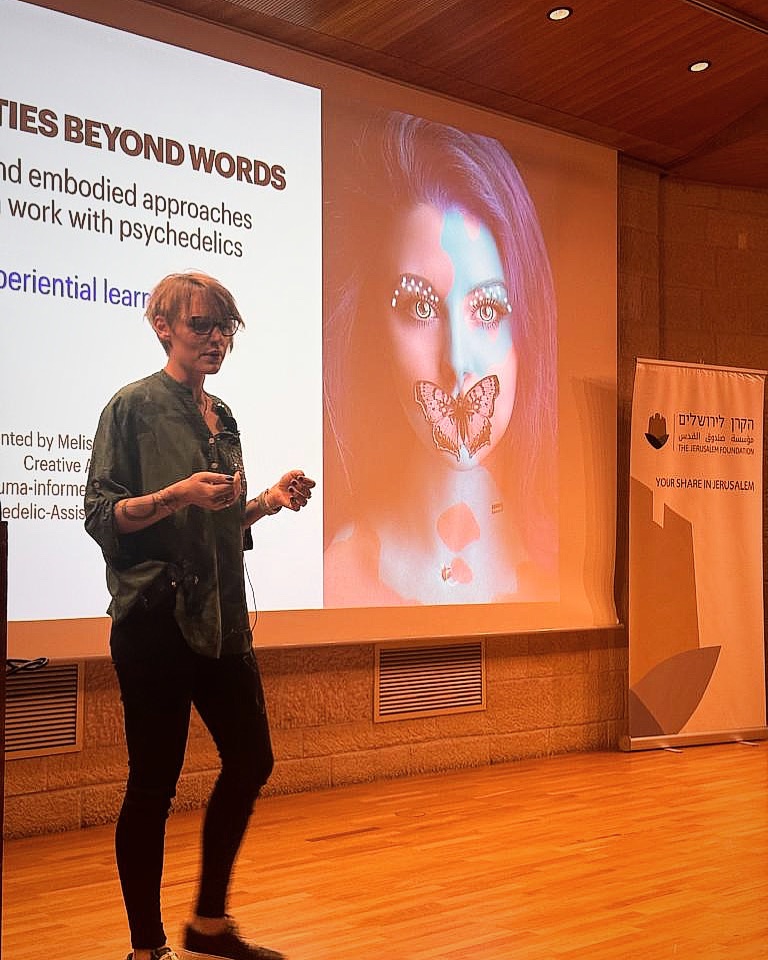
I write this post as I make my way back from Israel, having been a guest speaker and part of a facilitation team that offered training in psychedelic-assisted therapy for trauma survivors.

The trainees and trainers have left an in indelible mark on my heart, as the nature of the training was incredibly inclusive, intimate and rich.

My topic was ‘Possibilities Beyond Words: creative and embodied approaches to trauma work with psychedelics.’ I feel privileged to have been given the opportunity to travel to Israel and speak about what I am most passionate about.

When someone survives an event that is truly traumatising, it often leaves them without words, speechless, unable to articulate their traumatic experience or to describe their inner world of emotions and sensations. This is when non-verbal , creative or embodied approaches are so beneficial.

Through working this way, we as therapists can offer our clients opportunities to express themselves without words, to be heard without speaking and to come to understand themselves and their trauma responses better. Ultimately, we can afford our clients hope when previously there was none.

To find out more, please feel free to contact info@melissamcwalter.co.za or to WhatsApp 0834129768.

Make this the year you re-discover yourself

I’m not a big believer in many New Year’s resolutions, but a new year provides us the opportunity to honour ourselves by undertaking the adventure to which we are called.

Staying in the ordinary world – home, comfort, the Known – brings us no closer to coming Home to ourselves.

The journey is not without challenge, excitement, temptation, tolls, trials and love. Indeed, it is venturing into the Unknown, a place ripe for transformation.

This is not a journey that you take alone. A mentor is needed, although you are the traveler, responsible for your life and your choices.

The reward is awesome and the freedom, wisdom and power that you can attain is real.

If you feel a nudge, a sense of an urge to respond to a call that beckons you beyond your ordinary world, I encourage you to listen to it and follow where it takes you.

My personal call is to mentor people just like you, to come alongside you as you bravely venture into the Unknown. I provide direction, encouragement, understanding and wisdom through various different approaches that I have honed over the years.

There are many ways to follow your call. If you are in any way aware of this urge to dive deeper, you have only to contact me to set up an initial meeting, where we can see if my mentorship and your story can find a healing synergy.

Contact Melissa via email (info@melissamcwalter.co.za) or via WhatsApp (0834129768). This may be your first step towards following your call to the path you know you need to follow.