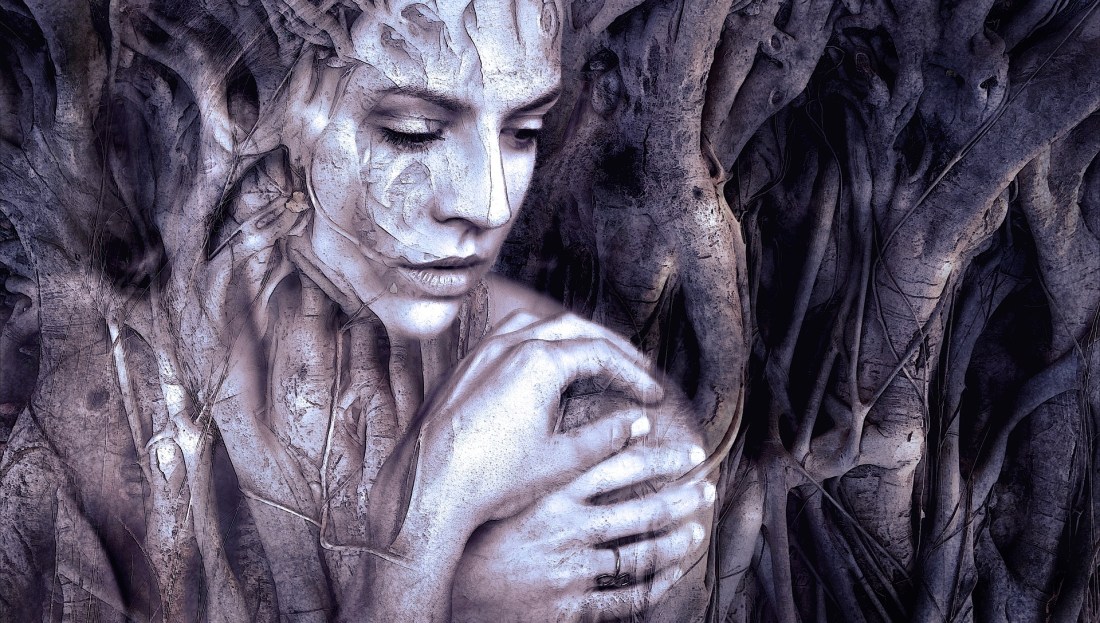
New frontiers in psychedelic therapy

As Ketamine becomes more mainstream, and organisations like SIPSA (Society of Interventionist Practitioners South Africa) are forming to potentially guide the use of psychedelic-assisted therapy, one has to realise that we are reaching a new era, where medicines (such as ketamine) that were previously thought to be damaging or innocuous, might in fact have some benefit.1 According to SIPSA’s constitution, one of their aims is:

“To promote the professional and legitimate interests of ketamine and
psychedelic treatments.”2

The growing interest in legal psychedelic treatments can be understood, as few medications offer the immediate relief for suicidal ideation than ketamine can3.

Other psychedelic treatments that are not legal in South Africa may not be on offer at healthcare establishments, but individuals are experimenting with them on their own4 and thus sometimes bringing the psychedelic experience into the therapy space. I have found through consulting the literature5 and my own experience that (without advocating for the use of such substances) creating a safe space where transparency is accessible, insights from psychedelic experiences on psilocybin (“magic mushrooms”) and MDMA can form an important part of the therapeutic process, if the client has chosen to have that experience on their own6.

To find out more, contact Melissa

  1. https://sipsa.org.za/wp-content/uploads/2024/06/SIPSA-CONSTITUTION-2024.pdf ↩︎
  2. https://sipsa.org.za/wp-content/uploads/2024/06/SIPSA-CONSTITUTION-2024.pdf ↩︎
  3. Ketamine for the acute treatment of severe suicidal ideation: double blind, randomised placebo controlled trial
    BMJ 2022; 376 doi: https://doi.org/10.1136/bmj-2021-067194 (Published 02 February 2022) ↩︎
  4. Pilecki, B., Luoma, J.B., Bathje, G.J. et al. Ethical and legal issues in psychedelic harm reduction and integration therapy. Harm Reduct J 18, 40 (2021). https://doi.org/10.1186/s12954-021-00489-1 ↩︎
  5. Front. Psychol., 15 March 2021 Sec. Psychopathology Volume 12 – 2021 | https://doi.org/10.3389/fpsyg.2021.645246 ↩︎
  6. Front. Psychol., 15 March 2021 Sec. Psychopathology Volume 12 – 2021 | https://doi.org/10.3389/fpsyg.2021.645246 ↩︎

9 Reasons Why People Seek Out Alternative Therapies

“I have been to so many different therapists, psychologists and helpers but I have not found what I need.”

“I haven’t found anyone that I can really connect with.”

“I need to connect with a real person, not a blank face.”

“I don’t feel like I can relate to my therapist.”

“I don’t want to blindly follow a conventional medicine model, but I also don’t want to ignore important medical advice.”

“Traditional therapy is just not working for me.”

“I am desperate for my mental health or my child’s mental health to improve, and nothing seems to be working.”

“I’ve tried everything.”

“Just simply talking isn’t helping me.”

These are some of the most common reasons my clients look for alternative therapies, and often why they come to me. I highly value the fields of psychology and psychiatry, which is why I work collaboratively with other professionals. However, traditional therapy approaches are not for everyone.

Sometimes, people need a different approach in order to feel seen and heard. The traditional therapy models tend to allow less transparency, real-ness and openness from the therapist, with the focus remaining exclusively on the client. This works really well for many people.

For others, the core element of safety in therapy can only be found in an imperfect, somewhat irreverent approach that allows relationship and connection to unfold between two real human beings. I bring a valuable expertise to the relationship pertaining to the areas of therapy and skills I offer; however, I am not an expert on life. This is a journey we undertake together. The relationship we form is the vehicle for growth and healing.

The integrative nature of this approach means that we may use talking, music, art, movement, trauma-informed yoga, breathwork, lifestyle modification, creative process, symbol work, nature, writing and/or mindfulness in a way that feels safe and appropriate for you.

I like to take 1 – 3 sessions to get to know you and to allow you to get to know me. From there, we can decide whether we would like to work together and if I could be helpful.

If you are interested in integrative therapy, an alternative approach, please contact Melissa by clicking here

Hallmarks of a Mystical Experience

William James, in The Varieties of Religious Experience, delineated four major hallmarks of what might be described as a mystical experience.

  1. Ineffability: the individual just can’t put words to the experience, verbal description does not – cannot – do it justice or even begin to portray the authority, significance or nature of the event.
  2. Noetic Quality: the experience appears extremely significant and important for to the individual and it carries a kind of deep authority, inner knowing and personal truth.
  3. Transiency: the mystical state is not sustained as in it’s peak, but fragments, traces, parts, a felt sense and innate knowing – these do persist and are subject to ongoing development, meaning that the insights/wisdom/truths can deepen in richness and significance over time.
  4. Passivity: it is not by the individual’s active will or direction that the mystical experience occurs. Rather, the individual will is suspended for a time and it is as if the individual is ‘moved’ by something larger than him or herself (such as a higher power).

Clearly, this describes an experience that is quite enormous, powerful and outside of ordinary life experience. This is something that is remembered, owned, held tightly and nurtured. Something that becomes precious, guiding and indeed transformative in one’s life. A deep truth, knowing, reality or beauty may be revealed that is intrinsic to something ordinary, everyday and obvious. The experience of such states can be immensely powerful and transformative in one’s personal journey as well as for collective wellbeing. Does such a state have to have anything to do with religion?

It is possible but uncommon to enter such an altered state of consciousness without intention in everyday life, perhaps but not necessarily while listening to music or being in a sacred or natural space. However, there are various ways to prime for such an experience. For example, one way is through a meditation practice, another through Guided Imagery and Music, and another is through facilitated breathwork. Another increasingly acceptable and accessible way is through the use of sacred plant medicine, such as magic mushrooms (psilocybin) and ayahuasca which through their psychedelic (that is ‘mind-manifesting’) properties may occasion such mystical experiences. While mystical states and religion can seem confusingly intermingled, they are not the same thing. There are many religious people who have never had a mystical experience of this nature, while there are stalwart atheists who have. It is a human experience, not owned by any denomination, school of thought, medical practice or form of therapy. It is true that such experiences may absorb a kind of religious quality, depending on many factors such as the individual’s life experience, the place the experience occurs and even the music playing during the event.

Have you ever experienced an altered state, a mystical state or a spiritual state that relates to James’ conception?

For more information about altered states of consciousness, psychedelic integration, guided imagery and music, mind expansion, transformation and mystical states, please contact me to find out more.

References:

Griffiths, Roland & Richards, William & Mccann, Una & Jesse, Robert. (2006). Psilocybin Can Occasion Mystical-Type Experiences Having Substantial and Sustained Personal Meaning and Spiritual Significance. Psychopharmacology. 187. 268-283. 10.1007/s00213-006-0457-5.

James, W. (1902), The varieties of religious experience. New York: Longmans, Green & Co.

Pollan, M. (2018). How to change your mind: What the new science of psychedelics teaches us about consciousness, dying, addiction, depression, and transcendence. New York: Penguin Press.