Inviting curiosity and compassion as you explore your inner world

Trauma, depression, anxiety and life challenges can leave you feeling disconnected from yourself, overwhelmed, dysregulated, out of rhythm and without a sense of true meaning or purpose. Life events can imprint certain unhelpful ways of thinking upon you, which you may find difficult to escape, or even to identify. Your intuition may feel like a luxury you cannot afford, or access.

You may fear your feelings, believing they are too much for you to contain. You may feel that you are too much for others or too little. You may be in battle with your body, misunderstanding it’s language and unsure of how to re-connect with it. You may feel betrayed by yourself, by your body.

You may doubt yourself, doubt whether you are capable, doubt whether you can love and be loved. Your beliefs about yourself and the world may be unfounded, and unhelpful. You may wonder who you are, whether you can know yourself in any meaningful way. Your life, your decisions, your view of yourself, may be dominated by events, people, traumas of the past. You may feel stuck and unable to move past such things.

Your behaviours may be contrary to what you truly desire for yourself; you may feel you have no control over them. You may get stuck in a loop of damaging, unhelpful ways of acting in relationships. You may secretly long for more in life. You may desperately want to understand yourself. You may need to turn inward and accept the call to return home to your true self.

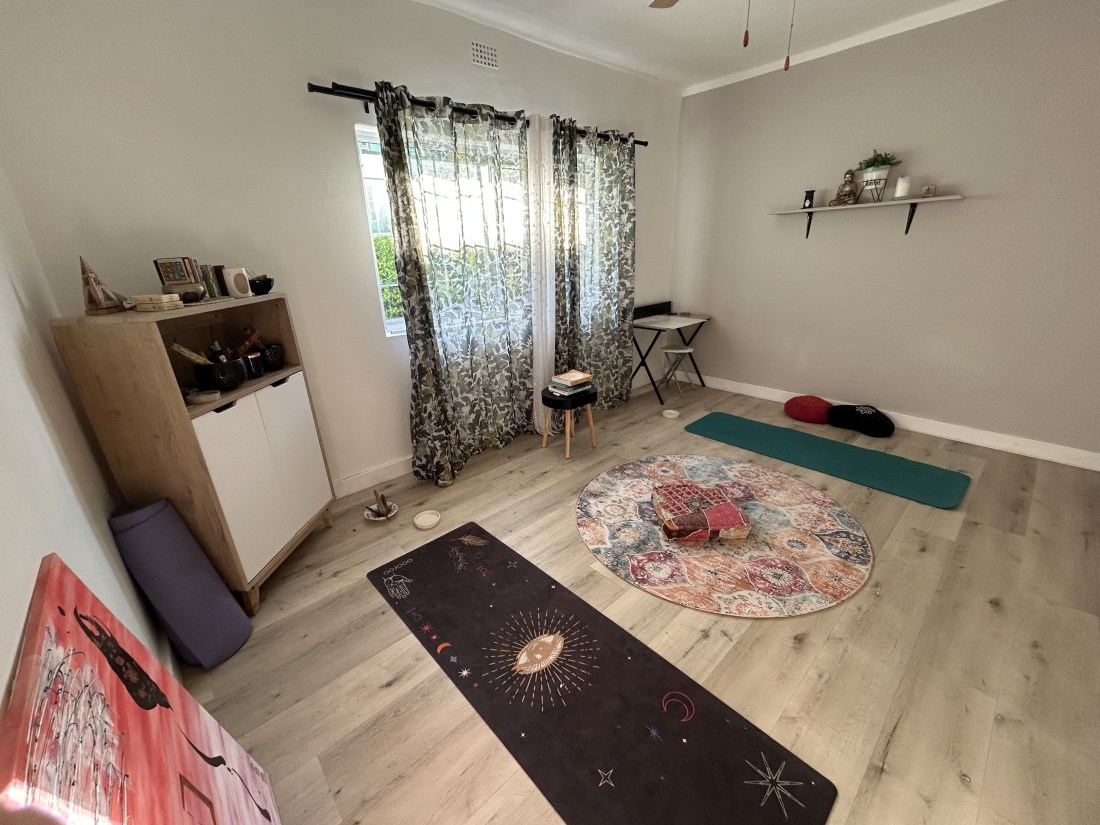
Therapy sessions are adapted to your needs. I work on a continuum from verbal therapy to body-based techniques. This holistic approach to therapy is suited to various mental health challenges, such as depression, anxiety, bipolar and personality challenges, as well as life transitions or spiritual searching. The work is trauma-informed and consciously focused on reducing power dynamics. I work out of a beautiful practice in Vredehoek, Cape Town, where we have the space to move between verbal and body-based work.

To enquire about therapy or book a session, contact Melissa: Whatsapp 0834129768 or email info@melissamcwalter.co.za


Psychedelics and Therapy

Many people are using psychedelics without the right preparation or guidance. Integration of these experiences is crucial to helping the individual make changes and gain insights that affect their daily life and have a lasting effect (Amada, N., & Shane, J.,2022). From the aforementioned study:

Results indicated that perceived benefits to narrative self-functioning is one pathway through which integration of psychedelic experience may promote optimal well-being for both clinical and non-clinical populations.1

 From a harm reduction perspective, using substances like MDMA or psilocybin can be carefully and non-judgementally thought about and discussed with your therapist. This includes looking at minimising the possible risks and maximising the potential benefits, understanding the role of set and setting as well as working with intentions. Managing expectations is another key aspect of harm reduction, as well as discussing aspects of safety and consent. (Gorman et al, 20212).

If an individual is committed to undertaking a psychedelic experience, or has already had one, therapy that incorporates elements of preparation and integration can be valuable, always minimising risks and enhancing potential benefit in service of personal growth.

Various preparation and integration techniques may be offered in therapy, including non-verbal, arts-based approaches, journaling, mindfulness or movement practices and time spent in nature. 

Preparation sessions consist of establishing a trusting relationship with the therapist, getting to know the pieces of the individual’s puzzle, installing practices that lead to a safer psychedelic experience. Gorman et al state “…preparation for a psychedelic experience is guided by a patient’s reasons for using a psychedelic. The therapist must inquire about the nature of the patient’s motivations.” In my experience, many people find enough value in these preparation sessions so as not to consume a psychedelic, but to rather continue with the therapeutic work. 

Integration sessions offer a space for meaning-making and drawing out whatever value and insights can be learned from the psychedelic experience. According to Gorman et al,

“Psychedelic integration is a process in which the patient integrates the insights of their experience into their life, and Psychedelic Harm reduction and Integration is a method of supporting that in the clinical consultation room3.”

Furthermore, PRATI (Psychedelic Training and Research Institute) states that

“Integration provides a space for clients to gain clarity, perspective, and wisdom from their medicine sessions… can help people to understand, contextualize, and make use of their experience in a meaningful and lasting way.”4

Essentially, the approach to working with psychedelics is one of harm reduction – reducing the negative possibilities and optimising positive ones, all in the service of improving the client’s quality of life and keeping them safe and healthy. It is non-judgemental by nature and does not encourage nor discourage the individual, who has the agency to make their own choices.

To find out more contact Melissa.

References

  1. Amada, N., & Shane, J. (2022). Self-Actualization and the Integration of Psychedelic Experience: The Mediating Role of Perceived Benefits to Narrative Self-Functioning. Journal of Humanistic Psychology0(0). https://doi.org/10.1177/00221678221099680 ↩︎ ↩︎
  2. Gorman I, Nielson EM, Molinar A, Cassidy K, Sabbagh J. Psychedelic Harm Reduction and Integration: A Transtheoretical Model for Clinical Practice. Front Psychol. 2021 Mar 15;12:645246. doi: 10.3389/fpsyg.2021.645246. PMID: 33796055; PMCID: PMC8008322. ↩︎
  3. Gorman I, Nielson EM, Molinar A, Cassidy K, Sabbagh J. Psychedelic Harm Reduction and Integration: A Transtheoretical Model for Clinical Practice. Front Psychol. 2021 Mar 15;12:645246. doi: 10.3389/fpsyg.2021.645246. PMID: 33796055; PMCID: PMC8008322 ↩︎
  4. https://pratigroup.org/psychedelic-therapy/methods-and-approaches-for-psychedelic-therapy-integration/ ↩︎

An alternative to traditional talk therapy

Many of my clients benefit from a more traditional talk therapy process and I encourage this. However, us humans are unique and may need to be met in ways that are not conventional.

Coming from an arts therapy background, I incorporate different ways of working, both verbal and non-verbal.

Oftentimes, traditional talk therapy is highly effective, but no one size fits all. There are alternative options for therapy.

If you are looking to work or process material in a way that is not the usual, with a strong emphasis on lowering any power dynamics and an appropriately reciprocal, authentic relationship, this might very well be for you.

Contact Melissa at info@melissamcwalter.co.za or via WhatsApp 0834129768.

Peddling Blossoms

The Full Circle Peddling Blossoms - blessing poem

Give up what you do not want, now.
Give up what you do not need.
Strip down; strip yourself down to bare, raw, bone essentials.


Beg the wind to blow away the excess and then plead for it to take away even more –
yes, even that which you thought you could not live without.
Strip down to the Imperishable I,
the Eternal Essence,
the bone-deep, soul-deep brutal burning that no fierce gale can sweep away.


And when you are only a kernel, a seed, a bare, tiny fraction of the earth, your very existence will call out with pure, raw potential
and you will be heard.
You will be heard by the mountain, by the river and by the sky.
You will be heard by the smallest creature, by the widest expanse and by the deepest, chasmic depth.


You will be allowed passage into fertile ground, granted the right to flow, to go
where previously you were too large and cumbersome to tread.
The immensity of your promise in this world will be borne within your humbled and holy frame,
Borne through the long season, the longest night and the darkness of the dirt that you must endure.


And then, as it should be, and as it is, you shall begin to expand, upward and downward, inward and outward, rooted in life-giving, life-promising earth,
rising true toward the sun,
renewed and blessed.
You will be blessed.

Tips for a Happy Holiday: Bipolar Christmas Planning

bipolar christmas coping strategies

Christmas is a difficult time for many people. There are financial obligations, family obligation and often many end-of year events that lead up toward Christmas, increasing the feeling of time-pressure and burnout that may already be present.

One of the reasons Christmas time is particularly difficult for individuals with bipolar disorder or depression is the lack of structure that permeates holidays. For those with bipolar disorder, having a predictable structure, a routine, and goal-oriented tasks are known to be extremely helpful for stabilising moods and preventing relapses or spiralling out of control. When the usual work/school structure falls away and no preparations have been made for the holidays and how one will cope, symptoms such as depression, mania, high levels of anxiety and even suicidality can crop up.

Because structure is important for your mental-wellbeing, it is a good idea to begin planning your routine for the holidays now, before the open, lazy days are upon you. I suggest you make a calendar (or update your calendar) based on the following suggestions and the coping strategies you already use. Here are some questions to get you thinking about possible ways forward:

  1. Is there a project you have been putting off that you can dedicate some time to each day? Schedule time to work on it into your calendar. This may be 2 hours daily, 30 minutes daily, or even 60 minutes every second or third day. Decide what you want to commit to and ensure that you have a regular entry for this activity in your calendar.
  2. Are there Christmas gifts or cards that you can make instead of buy – saving you money and providing you with a meaningful activity at the same time?
  3. Is there a friend or relative (or more than one) who you can meet with regularly, perhaps weekly for coffee or a walk, and schedule that meeting into your calendar? Alternatively, can you set up some meeting dates for during the holidays with various individuals?
  4. Can you ensure that your exercise routine remains relatively structured despite the ambiguity of holiday days? (If you don’t have an exercise routine, now would be a good time to put one into practice. Begin with a walk every day – or as often as possible – if you are starting from scratch.) We know exercise has strong mood benefits and it is obviously also great for keeping in shape and general physical health. If you are taking a break from exercise for a while in the holidays, I encourage you to continue with a light form of exercise like walking in order to still gain the mood benefits.
  5. Can you use social media and TV watching in an intentional manner: for example, as a reward for engaging in structured and meaningful activities, instead of opting for TV or Facebook in long, unregulated sessions? Too much social media is linked to depression and screen time easily sucks real time away. Because of this, one’s daily structure is disrupted and feelings associated with depression may emerge. This is true for most people, but those with bipolar disorder should be extra-aware of their screen time.
  6. Are there decisions you need to make about Christmas itself – which events you will go to, which you won’t, which you’ll host, which you won’t? If you feel you need to avoid certain shops/malls (or even people!) on certain days (such as busy Christmas Eve), make note of that now and schedule accordingly.
  7. Are you able to ensure that you have an exit strategy (such as taking your own car) for events that you are anxious about or hesitant to attend?
  8. Can you plan some ‘me-time’ activities, scheduling in a few things that you really enjoy and that feed your soul? Ensure it is scheduled in your calendar because these are easily the first things to fall away when demands compete; if you have kids, can you find someone to help you by looking after them during the scheduled ‘me-time’? Fit your activity to your pocket: a walk on the beach is free!
  9. Can you try keep to a regular sleep schedule, as much as is possible? This regularity is extremely helpful for maintaining a stable mood and sleep itself is revitalising and regenerating during times of wellness and ill health.
  10. Can you avoid over-indulging with alcohol? Too much alcohol consumption will certainly affect the mood negatively and if coupled with lack of sleep and lack of structure, the outcome may be damaging.
  11. Can you keep a journal, with as much or little detail as you like, in order to help track your thoughts, feelings, sleeping habits (monitoring that you are not losing sleep significantly) and general mood? This is also very helpful in the long-run, as you can reflect on your writings in the future and realise coping strategies, helpful activities or even triggers that you were not initially aware of.

I encourage you to begin working on a schedule that takes these questions into consideration. The holidays can be a happy, relaxing time but may need some extra thought and planning for those with bipolar disorder.

For more bipolar support, book a session by clicking here.